I use tarot and oracle cards as tools for reflection and contemplation. Rather than divining the future, they are a way for me to look more deeply at the "now."
"The goal isn't to arrive, but to meander, to saunter, to make your life a holy wandering." ~ Rami Shapiro

Showing posts with label eihwaz. Show all posts

Thursday, June 9, 2022

Even Keel

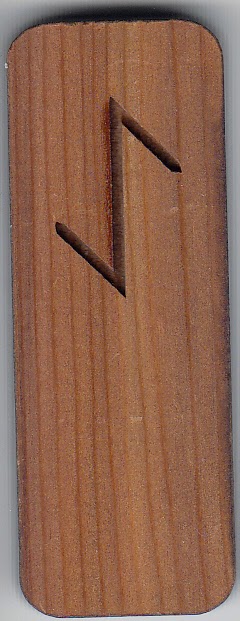
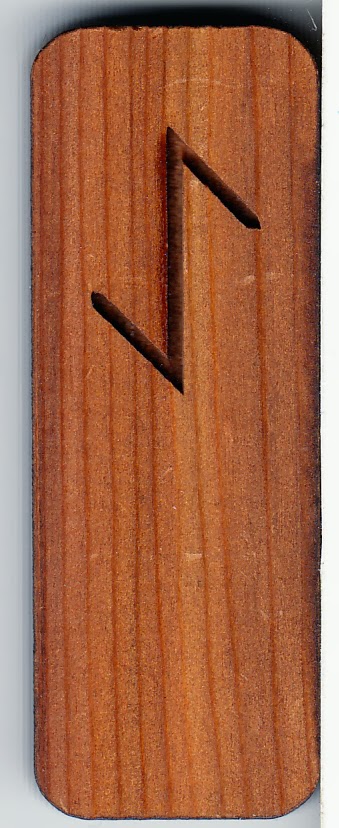
From the Shadowscapes Tarot, the Queen of Cups; from the Cedar Runes, Eihwaz:


This Queen is most at home when she's following her heart and intuition, but like the sea turtles, she does come up for air occasionally. That helps her stay on a even keel rather than getting swamped and pulled down by her or another's emotions. The Queen of Cups knows that life is fluid, just as the sea ebbs and flows, changing from one moment to the next. Eihwaz literally means 'yew,' an evergreen tree known both for its longevity (it's not considered an ancient tree until it is 900 years old) but also for its extreme toxicity. It is a paradoxical symbol, representing both life and death. So too are our emotions, those that bring us uninhibited joy and those that bring us to the depths of despair. The Queen of Cups would likely agree with the words of Ralph De La Rosa:

The thing is—in case you haven’t noticed—our emotions aren’t up to us. What we do with them, however, is absolutely up to us. The parts of us that express our afflictive emotions are very much like people. If we relate to them with understanding and care, there tends to be one kind of outcome. If we relate to them by shoving them in the basement or forcing them to change, we get another kind of outcome.


Wednesday, September 15, 2021

Melting Snow

From the Victorian Fairy Tarot, the Seven of Winter/Swords; from the Haindl Rune Oracle, Eoh/Eihwaz:

A fairy and his rat henchman have broken into a family's store of food for the winter. The Seven of Swords brings up the question of ethics: Can a wrong ever be considered right if it is done to correct an unfair imbalance? We all have a moral code that influences our conduct, but we often judge others by it as well. Stealing is never okay in my code, but neither is hoarding or a lack of generosity. Yet still I harbor a subtle "Is he or she deserving?" in my mind. The rune Eoh/Eihwaz relates to the yew tree, a plant that is evergreen and also poisonous. Its symbolism of both death and life points to an initiation that brings transformation and illumination. Such an initiation is not for the faint of heart; it requires that we "die before we die," a process of stripping ourselves of our pet concepts and opinions as well as our preferences and prejudices. It is only when our ego relinquishes control that we can see the world with clear vision.

Be melting snow.
Wash yourself of yourself.
~Rumi

Monday, February 18, 2019

Evolving Faith?

From the Animal Totem Tarot, the Hierophant; from the Blum/Gern Rune Cards, 'Eihwaz/Defense:'
The polar bear's message (from the companion book) states: "The world in which I live is changing fast. It is no longer as safe and reliable as it once was. The signs of this unstoppable change are all around me. But despite this, I must have faith." But is this a faith that holds onto tradition like a sinking lifeboat? Or is it a faith that evolves and adapts? I have to agree with Richard Rohr who said, "Religion tends to prefer and protect the status quo or the supposedly wonderful past, yet what we now see is that religion often simply preserves its own power and privilege." And that rigid power and privilege harm more than they heal. The Rune Eihwaz is about dealing with problems rather than bulldozing over them. Blum adds, "through inconvenience and discomfort, growth is promoted." Change will happen whether we close our eyes and minds to it or not. The best defense is in learning how to adapt to reality when we find we are powerless to change it.

According to Darwin’s Origin of Species, it is not the most intellectual of the species that survives; it is not the strongest that survives; but the species that survives is the one that is able best to adapt and adjust to the changing environment in which it finds itself. Applying this theoretical concept to us as individuals, we can state that the civilization that is able to survive is the one that is able to adapt to the changing physical, social, political, moral, and spiritual environment in which it finds itself.
Leon C. Megginson


Friday, April 3, 2015

Fast and Slow-burning Fires

From the Shadowscapes Tarot, the Knight of Wands; from the Cedar Runes, "Eihwaz:"
          This knight on his lion-like mount feels like a pressed down, coiled spring ready to release its energy. Instead of a loyal posse of hounds, he has nimble foxes, who complement his creative cleverness. His passion added to his unpredictable nature can dislodge most anyone from a rut. Moore states he symbolizes "change and progression towards a goal." He might not have staying power, but the Knight of Wands can at least get you off the couch.  
          Eihwaz is associated with the yew tree, "the greenest of trees in winter." The yew is known its resilience and strength: "hard and fast in the earth, supported by its roots." Travers suggests this rune represents change and transformation that is often difficult, yet if endured, will result in beneficial results. And though the knight above about might poke and prod to get one in motion, a slow-burning fire will be needed to maintain the movement toward completion.

Sunday, September 29, 2013

The Handling of Hickory Nuts

From the Shadowscapes Tarot, the Ace of Cups:
Fish and water beings swim in a current that emanates from a chalice. But I also notice rings of energy spreading from the bottom of the cup. There are people I come in contact with almost daily, and I can see the effects of my love on them, like the ocean creatures in the current. But then there are those strangers I stand in lines with or pass at the grocery store who I may offer a smile or give some encouraging words that I might never see again. I think small acts of compassion or kindness will have a ripple effect in some of these cases. I might not get to hear or see "the rest of the story" (as Paul Harvey used to say), but I believe loving attention is never wasted.

 From the Cedar Runes this morning comes "Eihwaz:"
The yew is a tree with rough bark,
hard and fast in the earth, supported by its roots,
a guardian of flame and a joy upon an estate.
~ Anglo-Saxon poem
Eihwaz / Eoh is associated with the yew tree that is long-lived yet contains highly poisonous alkaloids. The teaching behind this rune is a tough one, like the rough bark of the yew. It deals with initiation and transformation (the hard part), but it ends with joy if one perseveres. Combining this rune with the tarot card above, I am encouraged to love the unlovable, those who seem so crusty and resistant to acts of kindness. Like a hickory nut, sometimes that hard exterior hides a tenderness hidden deep inside.