I use tarot and oracle cards as tools for reflection and contemplation. Rather than divining the future, they are a way for me to look more deeply at the "now."
"The goal isn't to arrive, but to meander, to saunter, to make your life a holy wandering." ~ Rami Shapiro

Sunday, January 7, 2018

Identification

This week I'll be using the Hezicos Tarot, created and self-published by Mary Griffin. Along with it I'll be using the Way of the Horse, an oracle deck and book set created by Linda Kohanov with Kim McElroy and published by New World Library. The two cards drawn for today are the King of Cups and 'Believe:'
          The King of Cups offers emotional support and wisdom. He suggests we look at our emotions mindfully and points out the spiral on his shell-crown. "We usually travel over and over in the same circle, feeling happy in one arc and depressed in another.Yet if we pay attention from an objective standpoint, we can travel in a spiral upward, finding insights along the way rather than staying stuck in a loop." The Believe card from the Way of the Horse refers to how we (our egos) carve an identity for ourselves like a statue. Unfortunately, as the companion book states, "What we carve in stone threatens to turn our minds to stone." I was reading Jan Karon's latest book from the Mitford series, and came across a line that hit me between the eyes: we don't have to define ourselves by our wounds. How often has the pain of the past become a permanent way to identify myself? Yet choosing not to do this doesn't mean I close the door on what was and pretend it didn't happen; instead I can look back to gain wisdom from lessons learned and open to gratitude for what was good and beautiful. If I'll travel in a spiral rather than a circle, I'll realize that I am much more than an event in the past. I am what I am only in each moment.

Saturday, January 6, 2018

Deepening not Hiding

From the Osho Zen Tarot, Transformation (Death); from the A'HA Oracle, 'Cocoon:'
           In Buddhism, impermanence (changing moment to moment) is the path; practice is a way to acknowledge and accept it with equanimity. It involves fully embracing it not only with the intellect but the heart as well. Yet we become attached to what we love, and suffer when it ends. It seems unfair that death or an end should come to the things or people we hold dear. The Cocoon card implies that we should somehow protect ourselves. Does this mean we are supposed to attempt to shut down our emotions or our mind? Walling ourselves off from reality - emotionally, mentally or physically - won't make it unreal. Norman Fischer explains: " I have experienced extreme sadness and loss, feeling the whole world weeping and dark with the fresh absence of someone I love. At the same time I have felt some appreciation and equanimity, because loss, searing as it can be, is also beautiful—sad and beautiful. My tears, my sadness, are beautiful because they are the consequence of love, and my grieving makes me love the world and life all the more. Every loss I have ever experienced, every personal and emotional teaching of impermanence that life has been kind enough to offer me, has deepened my ability to love."

“The Thing Is”

to love life, to love it even
when you have no stomach for it
and everything you’ve held dear
crumbles like burnt paper in your hands,
your throat filled with the silt of it.
When grief sits with you, its tropical heat
thickening the air, heavy as water
more fit for gills than lungs;
when grief weights you like your own flesh
only more of it, an obesity of grief,
you think, How can a body withstand this?
Then you hold life like a face
between your palms, a plain face,
no charming smile, no violet eyes,
and you say, yes, I will take you
I will love you, again.

~ Ellen Bass


Friday, January 5, 2018

Freedom of Flexibility

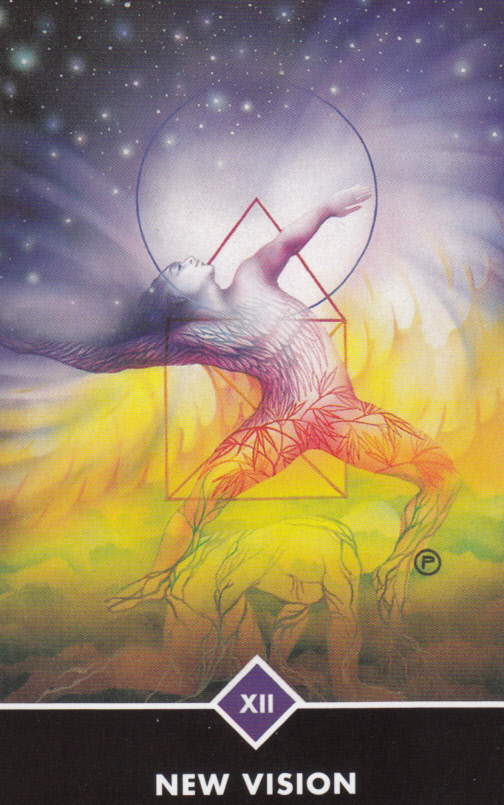
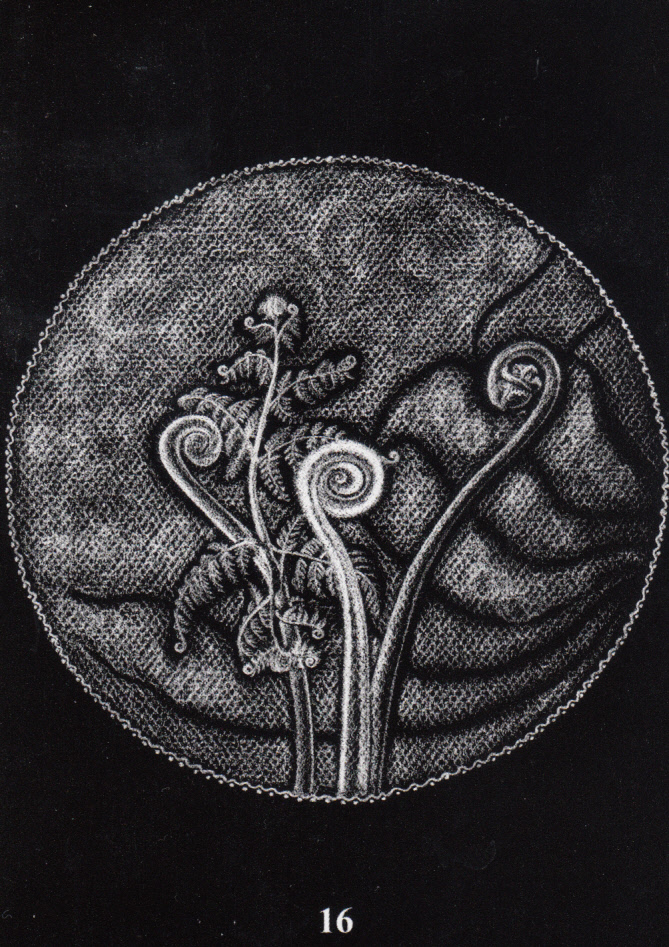
From the Osho Zen Tarot, New Vision (Hanged Man); from the A'HA Oracle, 'Unfurling:'
          We rarely acknowledge our rigid thinking, controlling behavior and unskillful, habitual patterns until we have been brought to our knees like the figure at the bottom. We may feel like we're about to snap in two, which is a sure sign of just how fixed and narrow our perspective has become. The Hanged Man is the point at which we surrender our opinions and look at things from another viewpoint. The man above the figure on the ground illustrates just how freeing such flexible thinking can be. Our thimble of possibilities becomes enlarged to the size of the starry sky. The Unfurling card suggests a period of opening and expansion, leaving behind our fixed patterns. After being trapped in our thimble of opinions for so long, we may be eager to rush our new growth. Yet life moves at its own pace, regardless of our impatience or prodding. We just have to relax and give it the space and sustenance it needs to grow.

Thursday, January 4, 2018

Without a Net

From the Osho Zen Tarot, Trust (Knight of Cups); from the A'HA Oracle, 'Alchemy:'
I don't mind working without a net. ~ Mary Chapin Carpenter

          Having genuine faith in anything is tough for humans; we'd rather experience a known amount of pain than deal with uncertainty. But this Knight goes beyond a mere mental acknowledgement; he acts without knowing for sure what the outcome will be (at least in the realm of emotions and relationships). The Knight of Cups doesn't have to do this blindly, however. Buddhists speak of 'bright faith,' which is trust based on observing certain practices and principles that work in another person's life. Yet the second step is just as important - 'verified faith' - when this framework is used in one's own life and tested. Only if it meets the personal test is it relied upon. The card of Alchemy shows bees creating honey from nectar. After gathering a load, each bee passes its mouthful to other workers who chew it and pass it on for about thirty minutes. It takes at least eights bees their entire lifespan to make one teaspoon of honey. Both cards suggest learning from others and accepting assistance. We might have to work without a net, but that doesn't mean we have to do it alone and without wisdom freely offered.

Wednesday, January 3, 2018

Content in All Circumstances

From the Osho Zen Tarot, Abundance (King of Pentacles); from the A'HA Oracle, 'Meteors:'
          This King reminds me of a hippie version of Hotei, a Zen monk known for his jovial personality, kindness toward children and benevolence toward others (he was always giving out candy and other gifts from his bindle). He enjoyed his simple life to the hilt and was a living example of contentment. For him, all of life - both the painful and joyful - was a spiritual practice. Padma suggests that this King at his best could balance both the material and spiritual, delighting in his abundance without clinging to it. The Meteors card parallels the idea of clinging; in this case, it is the type of excitement that can be found in the noise, crowd and colorful chaos of Mardis Gras. Neither having things nor enjoying the liveliness of life is wrong, but they can be a distraction that keep us from looking deeper at issues that need attention. No matter what is accumulated or how much we over-stimulate ourselves, contentment is always an inside job.
Attachment is the origin, the root of suffering; hence it is the cause of suffering.
- The Dalai Lama

Tuesday, January 2, 2018

Emotional Awareness

From the Osho Zen Tarot, Understanding (Page of Cups); from the A'HA Oracle, the 'Bell:'
          The bars on this bird's cage are disappearing; they represent a new understanding that brings freedom. What is it this Page has learned about emotions? Probably that they're an inherent part of humans and aren't evil in and of themselves. They are morally neutral until we act on them. The other part of this Page's insight is that our feelings aren't solid. I've been reading Dr. Beth Jacob's book, Writing for Emotional Balance in which she states that emotions change with time (our fast heartbeat slows, our stomachs relax) and with a change in viewpoint (rather than ruminating on our mental narrative). But how do we keep our feelings in neutral instead of stomping on the gas and reacting? The Bell card is a reminder of awareness, asking me "Do you know in what direction your attention has wandered off?" I can't stop my emotions any more than I can stop breathing, but I can be mindful of their transient nature and change channels when my thoughts start chewing the same idea over and over.
Just watch how your mind perceives or interprets any object that it contacts; what feeling—comfortable or uncomfortable—arises. Then you check: When I perceive this kind of view, this feeling arises, that emotion comes, I discriminate in such a way. This is how to check the mind; that’s all. It’s very simple. ~Lama Thubten Yeshe


Monday, January 1, 2018

Embrace Your Seasons

From the Osho Zen Tarot, Postponement (Four of Swords); from the A'HA Oracle, 'Fruition:'
           Life seems colorless and gray from this side of the window. But perhaps this woman is just feeling the aftershocks of the holidays and needs to rest body and mind. I've got a long trip tomorrow, first picking my mom up in one town and then taking her to another city for out-patient surgery. My back doctor has been on vacation, and so I've been trying not to aggravate a back injury in order to do the driving. But it's a new year, and my mind and body yearn to be doing something constructive or creative instead of resting. I'm antsy looking through that window of possibilities. Yet the A'HA card of Fruition suggests that I'll be in that vibrant landscape soon, I just need to be patient and take care of myself for now. Things won't happen just because I want them to; I have to put forth an effort, which in this case is rest.
 Give more respect to the cycles that govern the earth - they’re good for you too. Winter gives birth to the buds of spring and the glory of summer. So rest. Revive. Renew. Embrace your seasons. ~ Sophie Chiche